Visionary Lectures · Autumn 2026
From molecules
to society and machines.
Follow the links from molecules to neurons, from neurons to brains, and from brains to minds. Explore how minds shape society, and how brain science informs the machines we build.
Explore the programme15 September–15 DecemberAutumn 2026
Tuesdays, 10:15–12:00PER21 · University of Fribourg
Open to everyoneNo registration required
How do these scales connect?
How do molecules keep neurons healthy? How do groups of neurons give rise to brain function? How do brains support perception, thought and a sense of self?
Then look outward: how do learning and social life shape our minds? How can insights from the brain guide AI, new hardware and tools that aim to restore movement?

The autumn programme
13 lectures linking molecules, neurons, brains and minds with society and machines.
Add the whole series Calendar file · 13 lectures

Samy Rima
Your Future in Digital Neuroscience
University of Fribourg
About the talk
Which problems matter to you, and what kind of work would you like to do? This interactive opening lecture explores seven possible paths: basic research, applied research, startups, established companies, regulatory affairs, policy making, and scientific communication through journalism, writing and art. Through private reflection, polls and a fictional case, you will examine assumptions about daily work, compare possible directions and rethink a plan when an opportunity disappears. Drawing on the distinction between fragility, robustness and antifragility, the session asks how small, bounded experiments can turn uncertainty into useful evidence while protecting health and essential commitments. You will leave with a provisional direction and a concrete semester experiment: a question, an activity, feedback to seek and a point at which to decide what comes next.
PER21 · E120Add to calendar
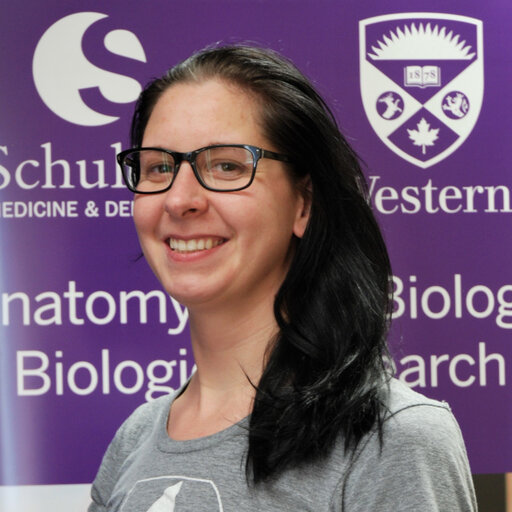
Krystyna Wieczerzak
From neurons to perception, my journey in neuroscience
Department of Basic Neurosciences · University of Geneva
About the talk
To perceive the world around us, we rely on receptors — in our eyes, skin, and elsewhere — that capture information and relay it through the peripheral nerves to the brain, where it is processed into an internal representation of external reality. In many ways, my own academic journey through neuroscience has followed a similar path: a signal picked up early on, carried through various stages, and gradually shaped into something meaningful. I'd like to take you through that journey. It began during my undergraduate studies, when I had the opportunity to volunteer in a lab investigating how afferent and efferent nerve fibers are affected by oxaliplatin, a common chemotherapy drug. That early exposure to the nervous system sparked a deeper question: how does conscious perception actually arise? This question has since grown into a strong personal interest in the philosophy of mind, which continues to shape how I think about the neuroscience I work on.
PER21 · E120Add to calendar
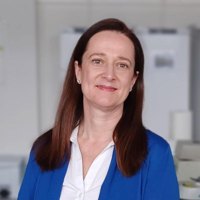
Patricia Boya
Autophagy in the Retina: from molecules to therapy
Neurosciences & Movement Sciences · University of Fribourg
About the talk
How could autophagy help protect neurons, and could manipulating it offer an approach to neurodegenerative conditions? The seminar explores these questions through practical examples from the laboratory, in the context of digital neuroscience.
PER21 · E120Add to calendar
Andrea Serino
A representation of the body in space, and its role in self-consciousness
University Hospital Lausanne (CHUV) · UNIL
About the talk
Peripersonal space as a neural representation of the body here and now, key to immediate interaction with the environment. Applied to virtual reality treatments for cognitive deficits and to sensorimotor deficits after stroke.
PER21 · E120Add to calendar

Juliette Lozano-Goupil
Toward a multimodal social neuroscience of mental disorders
Université de Toulouse Jean-Jaurès · LMU Munich
About the talk
How can we study social difficulties in psychiatric conditions as they unfold in real interactions? This seminar presents a multimodal social neuroscience approach, with a particular focus on psychotic disorders. It draws on EEG, fNIRS, audio-video materials and interactive paradigms to examine the behavioural and neurophysiological correlates of social cognition. The talk also considers the field’s limitations: ecological validity, differences between methods, and the gap between laboratory studies and real-world clinical applications.
PER21 · E120Add to calendar

Athina Tzovara
Machine learning for electrophysiological data
University of Bern · Institute of Computer Science
About the talk
An overview of invasive and non-invasive electrophysiological techniques for studying sleep and wake functions in humans. The seminar explores how machine learning and computational tools can be applied to these data to study brain function and dysfunction, including clinical applications involving sleep and coma.
PER21 · E120Add to calendar

Jaime Cadena Valencia
Computation in State Space: What Populations Do That Single Neurons Don't
Schmid lab · Department of Neurosciences and Movement Sciences
About the talk
Why recordings from hundreds of neurons demand a different unit of analysis than the single cell, and what the geometry of population activity reveals about computation across species and sensory domains.
PER21 · E040Add to calendar

Elisa Donati
From Neural Encoding to Neuromorphic Applications
Institute of Neuroinformatics · University of Zurich & ETH Zurich
About the talk
Spiking networks and mixed-signal neuromorphic hardware for real-time, low-power processing of neural and biomedical signals. Spiking autoencoders that learn from streaming data with local rules instead of backpropagation, demonstrated on event-based audio, EMG for prosthetic control, and motor cortex recordings.
PER21 · E140Add to calendar
Giuseppe Schiavone
Neuroprosthetics with microfabricated neurotechnology
Laboratory for Soft Bioelectronic Interfaces · EPFL
About the talk
Lessons from designing and testing microfabricated neurotechnology: system-level design, electrode scalability, and surgical usability. What it actually takes to move from materials science in the lab to a viable neuroscience research tool.
PER21 · E120Add to calendar
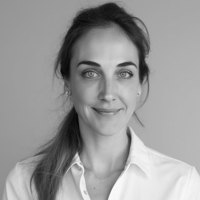
Solange Denervaud
How Learning Environments Shape the Developing Brain
CIBM Center for Biomedical Imaging · MRI EPFL Section
About the talk
What happens in a child’s brain when their learning environment supports autonomy, exploration and self-directed learning? This interactive session traces a research journey from the Montessori classroom to the TESSERACT initiative at CIBM. It examines evidence on how schooling trajectories relate to brain dynamics across development, alongside links between educational environments and creative thinking.
PER21 · E120Add to calendar

Lucas Spierer
The birth of BeweLab SA
Neurosciences & Movement Sciences · University of Fribourg
About the talk
The creation of BeweLab SA, a University of Fribourg laboratory spin-off, as a concrete example of technology transfer.
PER21 · E120Add to calendar
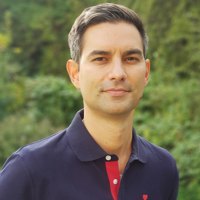
Mario Prsa
Recreating the sense of movement in neuroprosthetic systems
Department of Neuroscience · University of Fribourg
About the talk
The state of current research on how the brain processes proprioceptive signals, and the path towards recreating a sense of movement through brain-computer interfaces.
PER21 · E140Add to calendar

Roberto Caldara
EEG, Machine Learning and Eye-Tracking in Virtual Reality
Department of Psychology · University of Fribourg
About the talk
Key methods in cognitive neuroscience: neural and behavioural data classified with SVM, and virtual reality for studying cognition in naturalistic settings. Particular attention to eye movements in dynamic 3D scenes and why they are hard to analyse.
PER21 · E120Add to calendar
All sessions run from 10:15 to 12:00. Rooms vary; check the room beside each talk.
Join the conversation.
Come for a single lecture or follow the whole series. Students, researchers and anyone curious about digital neuroscience are welcome.
PER21, University of Fribourg
Boulevard de Pérolles 90, 1700 Fribourg, Switzerland